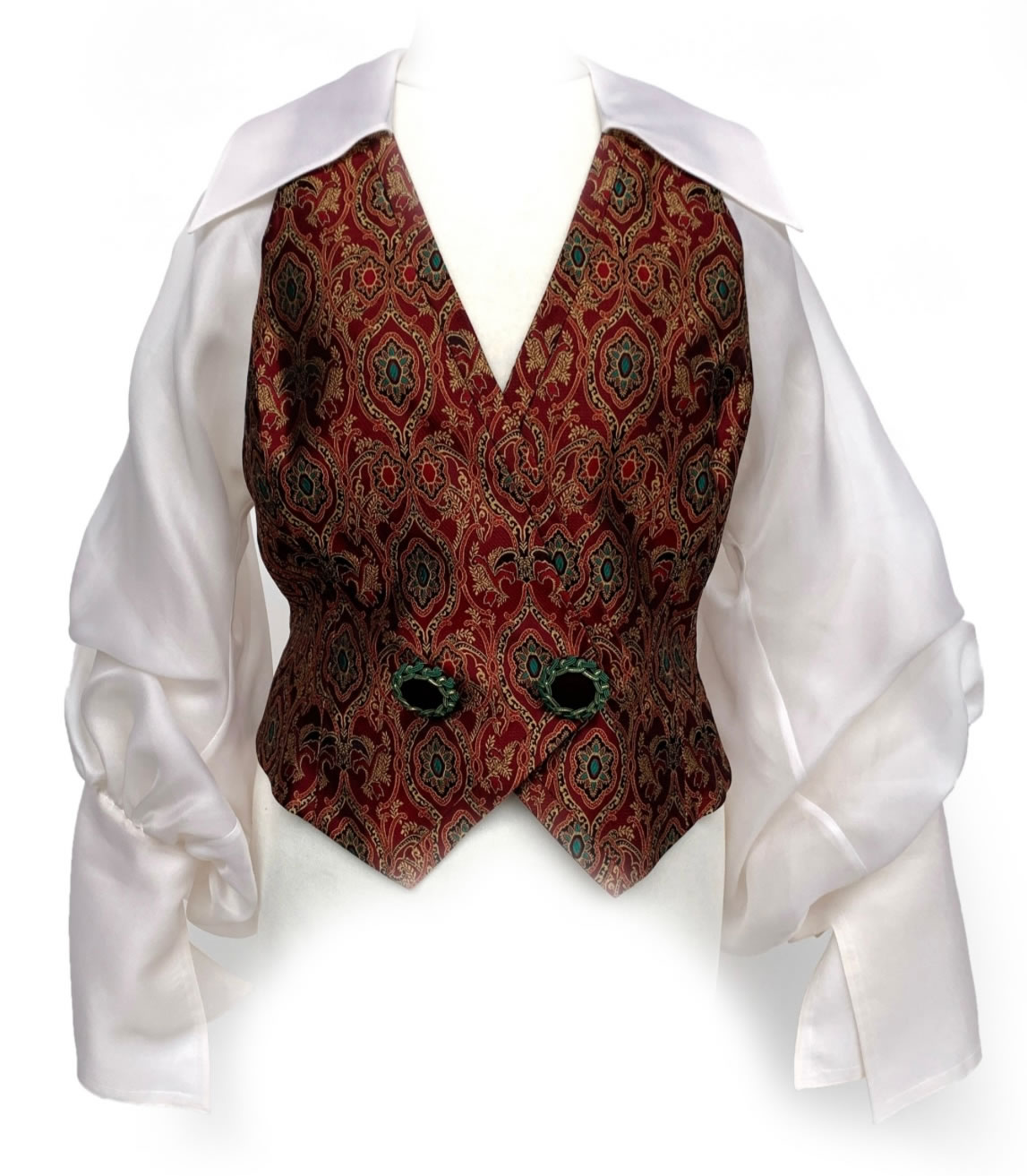
I still get goosebumps when I unhook a Vivienne Westwood piece from its hanger. It’s not just clothes — it’s history in fabric.
Vivienne wasn’t merely a designer; she was a rebel poet in couture. Her pieces don’t whisper — they shout.
I remember one crisp morning at a London flea market, brushing past a tartan jacket from her Anglomania line. The cut was razor-sharp, and I sensed tension in each stitch — that tug between tradition and protest. It was more than beautiful. It sparked something in me.
Owning a Westwood means holding a piece of a cultural explosion. Whether it’s a draped cosmic-drapery jersey, a punk-era graphic tee, or a sculptural gown — each garment demands attention. These clothes don’t just drape — they shape you. They refuse neutrality.
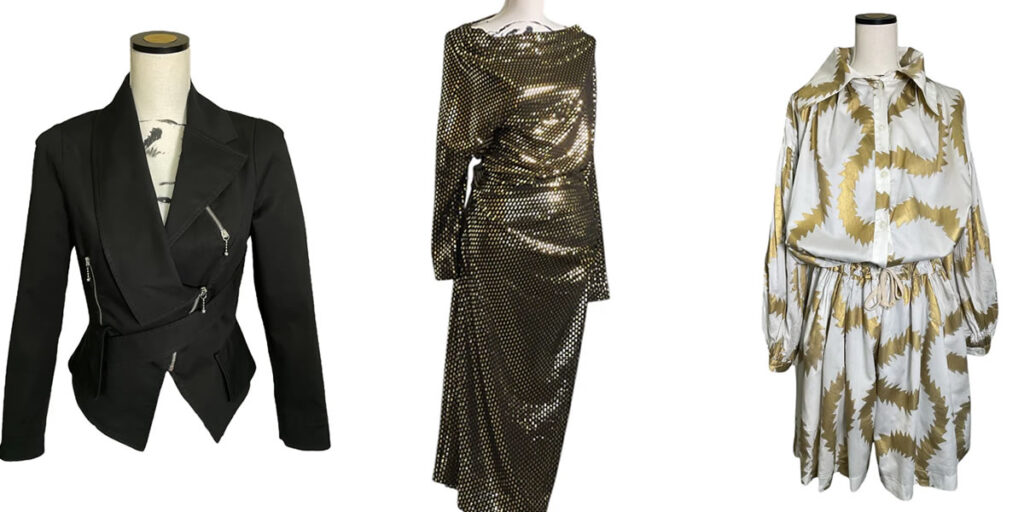
What struck me then, and still does, is how purposeful her design always was. Westwood didn’t do ‘pretty.’ She did power. Her tailoring wasn’t just precise — it was emotionally charged. A lifted waist, a gathered sleeve, a branded seam — all whispered rebellion even from a distance.
That embodied tension — that clever toughness — is why collectors, especially vintage lovers, revere her designs. You can feel her energy as you pull the garment close — the weight of the fabric, the irony in the pattern, the smirk sewn into the seams. Her clothes possess space. And anyone who truly gets vintage knows exactly what I mean.
Now, the National Gallery of Victoria has tapped into that energy. Their upcoming Westwood | Kawakubo exhibition — opening December 7, 2025 in Melbourne — is her first major showcase in Australia in more than 20 years, and the first since her passing in December 2023. It features over 140 pieces across five bold themes: Punk & Provocation, Rupture, Reinvention, The Body, and The Power of Clothes .
This isn’t just a nostalgic trip — it’s a moment of reckoning. Two iconoclasts, Westwood and Comme des Garçons’ Rei Kawakubo, side by side, unbound by chronology and rich in defiance ().
For us vintage collectors, this is more than archive porn. It’s validation. It reminds us that fashion can mean something. That a piece stitched in a small London studio can echo into eras beyond its time.
If you’ve ever hunted for an original Westwood and sensed the electricity of wearing her, you’ll feel it amplified at the NGV. If not, keep looking. Because wearing Vivienne is more than wearing vintage—it’s wearing an idea. Fierce. Romantic. Brilliantly constructed. And in a world that keeps replicating sameness, that’s an act of resistance.